How Ableism Blocks Disabled People From the Traditional Job Market
 Dec, 4 2025
Ableism isn’t just about rude comments or inaccessible buildings. It’s a system - built into hiring practices, workplace culture, and even the way we define "productivity." Disabled people aren’t missing skills or motivation; they’re blocked by assumptions that have nothing to do with their abilities. For example, a deaf software developer might write cleaner code than their hearing peers, but still get passed over because the interviewer assumed they couldn’t "collaborate well." This isn’t an isolated case. It’s the norm. And it’s costing the economy billions in lost talent. euro girls escort london might be a topic people search for on weekends, but the real missed opportunity? Employers ignoring qualified disabled workers every single day.
What Ableism Actually Looks Like in Hiring
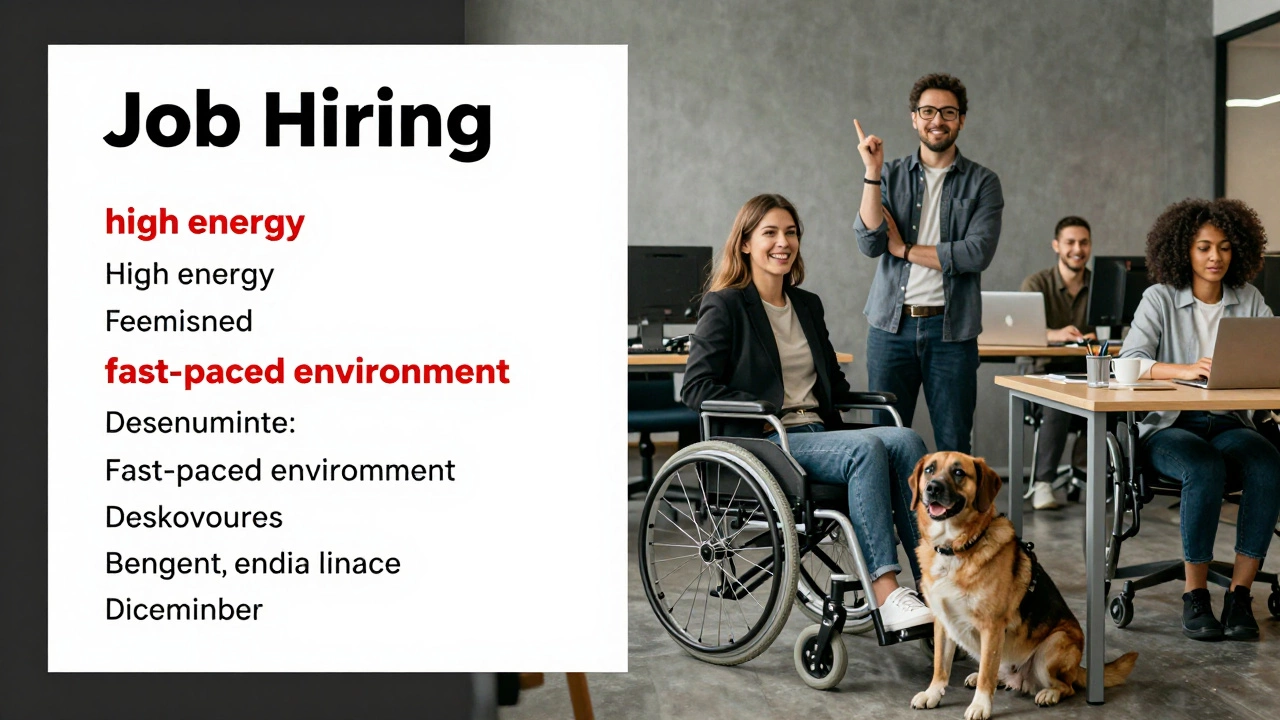
Ableism doesn’t always shout. Often, it whispers through job descriptions that demand "high energy," "fast-paced environment," or "must be able to work long hours." These phrases aren’t neutral. They’re coded language that pushes out people with chronic pain, mental health conditions, or mobility differences. A 2024 study by the Canadian Human Rights Commission found that 68% of job postings for mid-level roles included language that disproportionately discouraged applicants with disabilities - even when the job didn’t require physical stamina.
Interviews are another minefield. Candidates are often judged on how well they "present themselves," not how well they perform. A person with autism might struggle with small talk but excel at troubleshooting complex systems. Yet they’re labeled "not a cultural fit." A wheelchair user might be asked, "How will you get to the office?" - as if their commute is a personal failing, not the employer’s responsibility to accommodate.
The Myth of the "Ideal Employee"
The traditional job market still clings to a fantasy: the employee who shows up early, stays late, never takes sick days, and never needs flexibility. That person doesn’t exist - and even if they did, they’re not the most productive. Research from Harvard Business Review shows that flexible work arrangements increase output by 13% and reduce turnover by 50%. Yet companies still reward presence over performance.
Disabled workers often bring higher retention rates, better problem-solving skills, and deeper empathy - traits that improve team dynamics. But these advantages are ignored because hiring managers equate disability with limitation. It’s like rejecting a smartphone because it doesn’t have a physical keypad. The tool works differently - not worse.
How Accommodations Are Framed as Costs, Not Investments
When a disabled person asks for a screen reader, adjustable desk, or remote work option, employers often react like it’s a burden. They think about the price tag - $200 for software, $500 for ergonomic furniture. What they don’t count is the cost of replacing staff. The average cost to hire and train a new employee is $4,700 in Canada. For tech roles, it’s over $15,000.
And here’s the kicker: most accommodations cost nothing. A 2023 Job Accommodation Network report found that 59% of workplace adjustments cost $0. The rest averaged $500 - a fraction of what companies spend on recruitment ads or office snacks. Yet the mindset stays the same: "We can’t afford this." Meanwhile, euro girl escort london is a service people pay for on impulse - but real, lasting support for employees? That’s seen as a luxury.
Recruitment Channels Are Designed to Exclude
Most companies post jobs on LinkedIn, Indeed, or Glassdoor. These platforms aren’t built for accessibility. Job alerts don’t work with screen readers. Filters block applicants with non-traditional work histories. Application forms require mouse clicks, timed responses, or video uploads - all barriers for people with motor, visual, or cognitive disabilities.
Even when companies claim they’re "inclusive," they rely on the same broken systems. One tech firm in Toronto proudly advertised its "diverse hiring program" - but their application portal didn’t support keyboard navigation. The result? Zero disabled applicants hired that year. The problem wasn’t the talent pool. It was the gatekeepers.
Corporate Diversity Programs Ignore Disability
Companies love to tout their diversity stats - gender, race, sexual orientation. But disability? Often left out. In 2025, only 14% of Fortune 500 companies include disability in their public DEI reports. Why? Because it’s easier to celebrate visible differences than to confront the invisible biases that keep disabled people out.
Even when disability is included, it’s tokenized. A company might hire one person with a disability as a "symbol" - then fail to change policies, train managers, or adjust workflows. That’s not inclusion. That’s performance.

What Actually Works
Some companies are breaking the mold. Microsoft’s Autism Hiring Program doesn’t use traditional interviews. Candidates complete real-world coding challenges over several days. No small talk. No pressure. Just results. Since launching, they’ve hired over 500 neurodivergent employees - and retention is 90%.
IBM redesigned its hiring platform to be fully accessible. They removed timed tests, added audio instructions, and allowed applicants to submit work samples instead of resumes. Their disability hire rate tripled in two years.
These aren’t charity cases. They’re smart business moves. When you open the door, you don’t just get a worker - you get someone who’s fought to be seen. That kind of resilience translates into loyalty, creativity, and grit.
How Employers Can Start Fixing This Today
- Remove ableist language from job posts. Replace "fast-paced" with "results-driven." Swap "team player" with "collaborative problem-solver."
- Use accessible application platforms. Test them with screen readers and keyboard-only navigation.
- Train hiring managers on unconscious bias. Include disability in diversity training - not as an afterthought, but as a core component.
- Offer flexible work as standard, not a perk. Let people choose where and when they work best.
- Partner with disability-led organizations. They know who’s qualified. You don’t need to guess.
It’s not about being perfect. It’s about being willing to try. And to listen.
Why This Matters Beyond the Workplace
When disabled people can’t work, they’re pushed into poverty, isolation, and dependence. The economic cost in Canada alone? Over $17 billion annually in lost income and increased social support. But the human cost? Higher. Depression. Shame. Feeling like your body is the problem - not the system.
Changing hiring practices isn’t just fair. It’s necessary. We don’t need to "fix" disabled people. We need to fix the system that refuses to adapt.
euro escort girls london might be a search term people type into a browser late at night - but the real question is: why are we still treating human potential as something to be filtered out, not unlocked?